
In Australia, demand for nitrile gloves has seen a significant increase, particularly in the healthcare sector. According to 6Wresearch, demand continues to rise in the Australian medical gloves market, driven by stricter infection control protocols and long-term changes in PPE policies following the COVID-19 pandemic.[1].
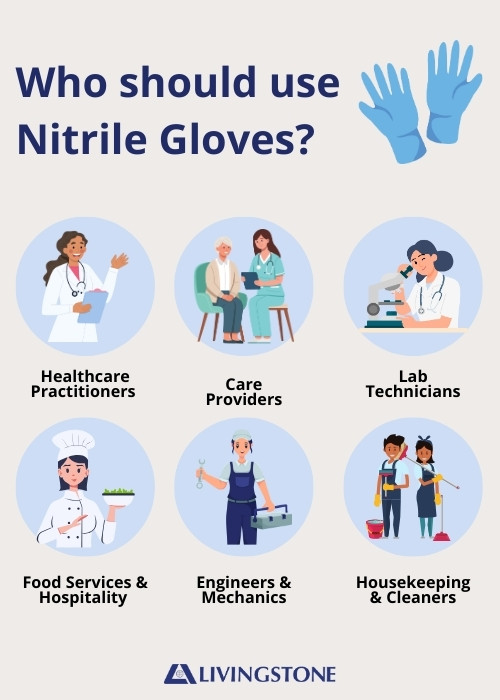
Known for their exceptional resistance to punctures, chemicals, and allergens, these gloves provide a safe and durable solution for sectors such as healthcare, food processing, and manufacturing. Their latex-free construction makes them especially suitable in environments where allergy prevention is essential. As a result, nitrile has become the preferred material for disposable gloves, offering a reliable balance of performance, comfort, and regulatory compliance across a wide range of Australian workplaces.
Powder-Free Gloves as a Workplace Standard
Powder-free nitrile gloves have become the industry standard across medical and food-handling environments in Australia. The absence of powder eliminates risks of contamination, allergic reactions, and airborne particles, which can compromise sterile conditions or irritate skin and airways.
In healthcare, powder-free gloves are often required by guidelines outlined by the Therapeutic Goods Administration (TGA)[2]. These gloves help reduce the risk of wound irritation and inflammation during clinical procedures. In food services, Food Standards Australia New Zealand (FSANZ) discourages the use of powdered gloves due to hygiene concerns and the risk of food contamination[3].
By choosing the powder-free variant, workplaces help maintain clean, compliant environments and reduce health risks for both staff and clients.
Key Benefits of Nitrile Gloves
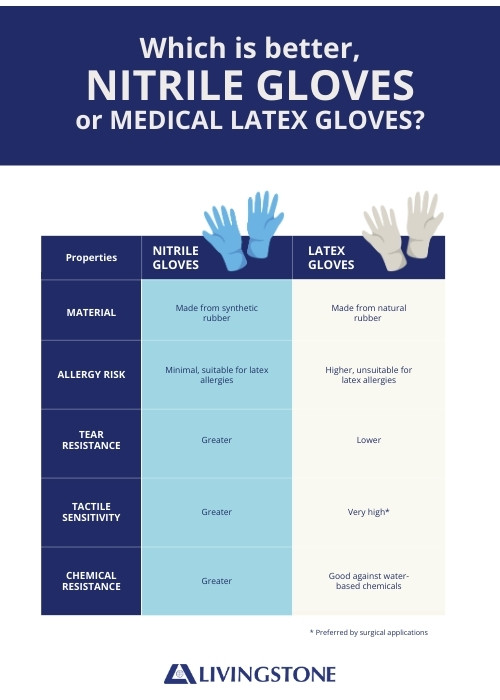
The rise in popularity of nitrile gloves can be attributed to their superior combination of safety, comfort, and durability. Compared to latex and vinyl gloves, nitrile options consistently offer greater resistance to tears, punctures, and chemicals, while also reducing allergic reactions.
One of the key benefits of nitrile gloves is their broad-spectrum chemical resistance, particularly against oils, solvents, acids, and cleaning agents. This makes them ideal for laboratory staff, cleaning personnel, aged care workers, and industrial workers. Their hypoallergenic composition means they can be safely used by people with latex sensitivity or allergy risk.
These gloves also have a longer shelf life than latex, making them ideal for bulk storage without degradation. Their durability and tactile responsiveness make them a smart investment for high-traffic work environments where safety and dexterity are both priorities.
Food Handling and the Use of Black Nitrile Gloves
Black nitrile gloves have become a common choice in the Australian food industry, particularly in commercial kitchens, food trucks, and catering. These gloves are not only durable but also aesthetically cleaner, as they mask stains from food or sauces.
For food safety, gloves must meet Standard 3.2.2 of the Australia New Zealand Food Standards Code, which requires that gloves used in food contact be safe and not contaminate the food. Black nitrile gloves, when certified as food-safe, are fully compliant with this regulation[4].
They are also commonly preferred by chefs and food service staff for hygiene checks and fast-paced environments, where quick visual checks for glove integrity are essential.
Common Types of Nitrile Gloves Available
Not all nitrile gloves are the same. Different industries require different levels of protection, which is why there are several categories of gloves available in Australia.
The medical-grade variants are regulated by the TGA and must meet Australian standards for use in healthcare environments. These gloves provide a barrier against viruses, bacteria, and bodily fluids. They are commonly used in hospitals, aged care, and general practice.
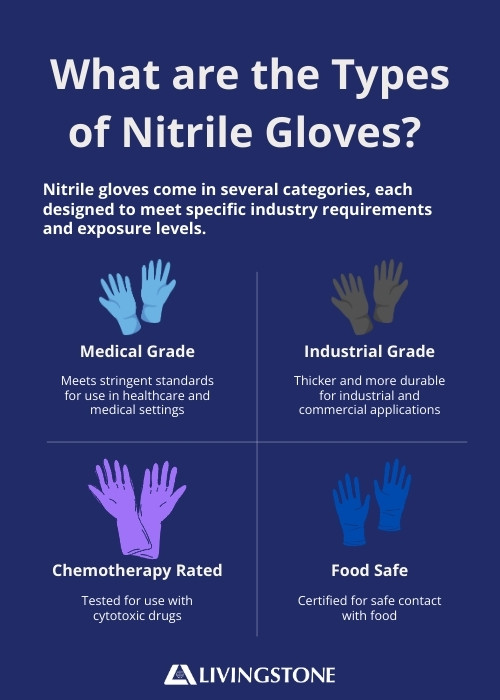
The industrial-grade variants are thicker and more resistant to abrasion and chemicals. These are typically used in automotive repair, cleaning, painting, and industrial manufacturing.
Chemotherapy-rated nitrile gloves are tested for protection against cytotoxic drugs and are used in oncology and pharmacy settings. These gloves meet stricter chemical resistance standards and are listed on the Australian Register of Therapeutic Goods Search (ARTG) [5].
Choosing the correct grade of nitrile gloves ensures compliance with occupational safety and health regulations and protects staff from unnecessary risk.
Comparing Nitrile Gloves to Latex Alternatives
Latex gloves have long been valued for their comfort and tactile sensitivity, especially in surgical and dental settings. However, latex allergies remain a serious concern for both staff and patients. For this reason, nitrile gloves are now more widely used across general clinical care and non-surgical procedures.
Nitrile gloves are more resistant to chemicals and punctures, making them safer for tasks involving harsh substances or sharp instruments. They also have a more consistent manufacturing process, which reduces batch variability and improves reliability.
While latex may still be used in highly specialised procedures where precise touch is needed, nitrile is now the preferred choice for general-purpose use across healthcare, food handling, and industrial applications.
Adoption of Nitrile Gloves in Australia
The use of nitrile gloves in Australia has grown steadily, driven by stricter workplace safety standards and rising awareness of hygiene protocols. During the COVID-19 pandemic, the demand for nitrile gloves surged in hospitals, aged care, childcare, and hospitality settings.
According to industry reports, businesses across Victoria, New South Wales, and Queensland are shifting toward nitrile as part of their long-term PPE investment strategy. Agencies such as Safe Work Australia recommend the use of nitrile gloves for workplaces exposed to infectious materials or dangerous chemicals [6].
As of 2025, nitrile gloves remain one of the most in-demand disposable PPE products in the Australian market, thanks to their versatility and compliance with national safety regulations.
Nitrile gloves are no longer just an alternative to latex. They are now the standard in protective handwear across healthcare, hospitality, industrial, and food service sectors. Their ability to offer protection against a wide range of hazards, while reducing allergy risk, makes them a smart choice for modern Australian workplaces.
By understanding the types of nitrile gloves available and ensuring compliance with local safety standards, businesses can make more informed, responsible PPE decisions. Whether you’re in a hospital, kitchen, or workshop, choosing nitrile gloves is a simple step toward a safer, more hygienic environment.
Want to learn more about our glove range? Explore our disposable glove collection
References
- 6Wresearch. (n.d.). Australia Medical Gloves Market Outlook. [online] Available at: https://www.6wresearch.com/industry-report/australia-medical-gloves-market-outlook [Accessed 3 May 2025].
- Therapeutic Goods Administration (TGA). (2023). Personal Protective Equipment for Health Professionals. [online] Available at: https://www.tga.gov.au/products/covid-19/covid-19-personal-protective-equipment-ppe/personal-protective-equipment-health-professionals [Accessed 3 May 2025].
- Food Standards Australia New Zealand (FSANZ). (2024). Home. [online] Available at: https://www.foodstandards.gov.au/ [Accessed 3 May 2025].
- Food Standards Australia New Zealand (FSANZ). (2024). Australia New Zealand Food Standards Code. [online] Available at: https://www.foodstandards.gov.au/food-standards-code [Accessed 3 May 2025].
- Therapeutic Goods Administration (TGA). (2024). ARTG – Australian Register of Therapeutic Goods. [online] Available at: https://www.tga.gov.au/resources/artg [Accessed 3 May 2025].
- Safe Work Australia. (2017). Managing Risks of Hazardous Chemicals in the Workplace. [pdf] Available at: https://www.safeworkaustralia.gov.au/system/files/documents/1702/managing_risks_of_hazardous_chemicals2.pdf [Accessed 3 May 2025].