








































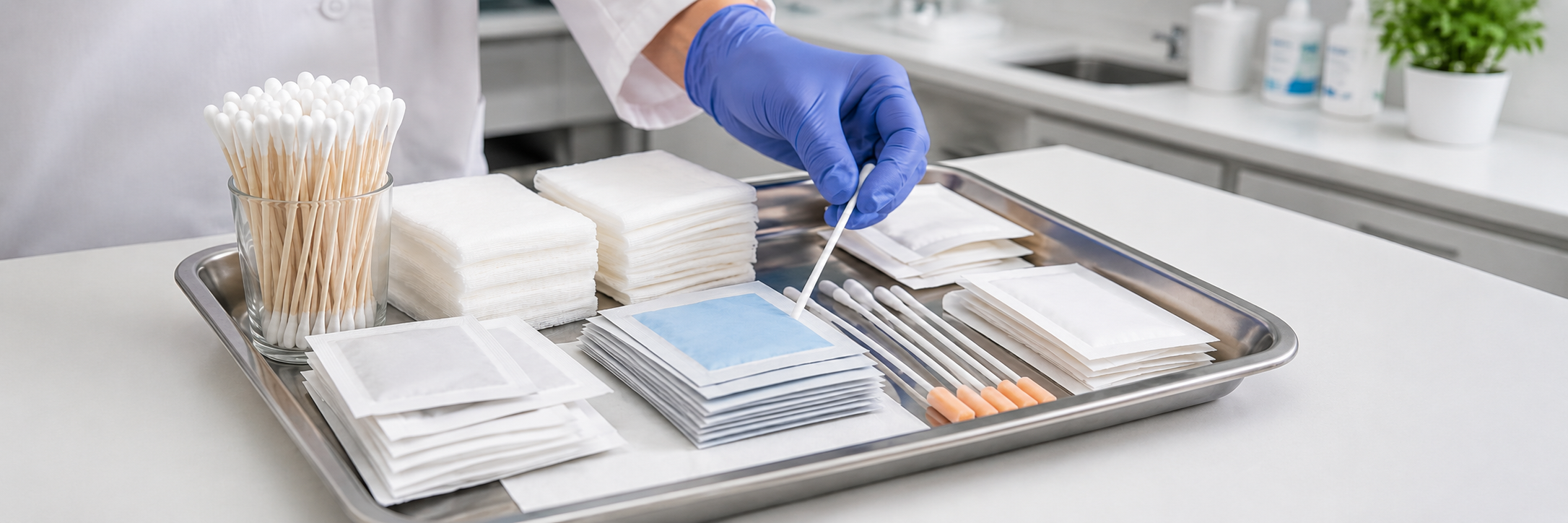
Swabs may be small consumables, but choosing the right type can make a noticeable difference to how a task is performed. Across healthcare, aged care, beauty, tattoo, laboratory and general care settings, swabs are used for cleaning, preparation, absorption, application and wound support.
The right option depends on the task, the surface, the level of absorbency required and whether sterile or non-sterile use is appropriate. Cotton tips, gauze swabs, alcohol swabs, skin prep wipes and applicator swabs all serve different purposes. Understanding the difference can help teams select products that better suit their environment.
Why does choosing the right swab matter?
Swabs are often used close to the skin, near wounds, around treatment areas or on small surfaces that require control. In healthcare environments, infection prevention and control practices help reduce the risk of transmission between patients, staff and others in the care environment. The Australian Commission on Safety and Quality in Health Care identifies infection prevention and control as an important part of safer healthcare practice.
Choosing the right swab also helps reduce unnecessary product use. A gauze swab may be suitable when absorbency is needed, while a cotton tip may be better for detailed application. An alcohol swab may support skin cleansing before certain procedures, while a skin prep wipe can assist with treatment preparation.

What are cotton tips used for?
Cotton tips are useful when a task requires precision. Their small tip size makes them suitable for detailed application, gentle cleaning of small areas and controlled product use.
In beauty settings, cotton tips may be used during makeup correction, lash and brow services or skincare preparation. In tattoo settings, they can support careful cleaning around smaller areas during preparation or finishing tasks. In laboratory and education environments, cotton tips may assist with sample handling or controlled application, depending on workplace procedures.
When should gauze swabs be used?
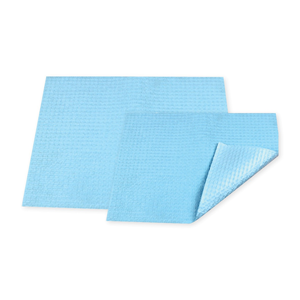
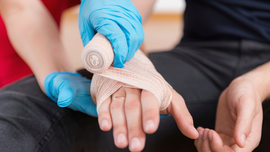
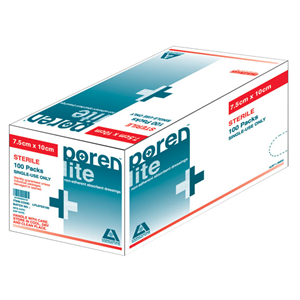
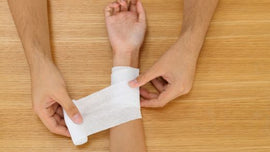
Gauze swabs are commonly used where absorbency and coverage are required. They are often associated with wound care, dressing support and clinical preparation. Depending on whether the product is sterile or non-sterile, gauze swabs may be used for different levels of care or general support tasks.
For minor cuts and grazes, healthdirect advises keeping wounds clean and watching for signs of infection. In professional environments, wound care products should always be used according to workplace procedures and clinical guidance.
Livingstone’s gauze swabs are available in different sizes, ply levels and packaging formats. Smaller options may suit controlled wound care or dressing preparation, while larger swabs can provide broader coverage.
What is the difference between sterile and non-sterile swabs?
Sterile swabs are processed and packaged to support use in clinical or wound care settings where sterility is required. Non-sterile swabs may suit general absorption, cleaning or preparation tasks where sterile use is not needed.
The choice should depend on the task, the level of skin contact, workplace policy and the advice of a qualified healthcare professional where wound care is involved.
What are alcohol swabs used for?
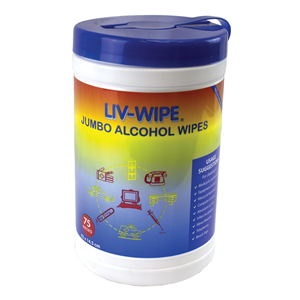
Alcohol swabs are commonly used for skin cleansing before injections, blood glucose testing, venepuncture or other tasks where a small area of skin needs to be prepared. They are usually individually wrapped, which supports convenient single-use handling.
Because alcohol swabs are designed for specific preparation tasks, they should be used as directed and only where suitable. They are not a replacement for general wound cleansing or broader surface cleaning. Workplaces should check the product description, active ingredient and intended use before selecting an alcohol swab.
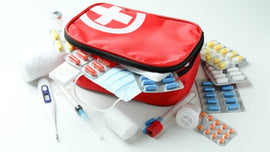
Livingstone’s swabs and wipes range includes options used across first aid, wound care and professional settings.
How are skin prep wipes different from alcohol swabs?
Skin prep wipes are used to support preparation before procedures, treatments or skin contact tasks. Some are formulated for cleansing, while others may contain antiseptic ingredients or specific preparation solutions. Their size, formulation and intended use can vary, so they should not be treated as identical to alcohol swabs.
In tattoo and beauty settings, skin prep products can support preparation before a service begins. In healthcare and aged care environments, selection should follow workplace procedures and relevant clinical guidance.
When are applicator swabs helpful?
Applicator swabs are useful when a liquid, solution or product needs to be applied with control. They may be used in medical, laboratory, beauty or tattoo settings, depending on the product type and workplace requirements.
Their main advantage is targeted application. Applicator swabs can help reduce product wastage when only a small amount is needed. They can also help users avoid using a larger wipe than necessary.
How should workplaces choose the right swab?
Before selecting a swab, consider whether the task requires absorbency, precision, sterility, skin contact, wound care support or controlled application.
Cotton tips can support detailed tasks. Gauze swabs are useful where absorption and coverage are needed. Alcohol swabs can assist with small-area skin cleansing before suitable procedures. Skin prep wipes support treatment preparation, while applicator swabs help with targeted product use.

Supporting better product selection
Swabs play an important role in daily preparation, care and controlled application. By choosing the right swab for the task, workplaces can support cleaner preparation, more efficient product use and smoother workflows across care, treatment, laboratory and professional service environments.
References
Australian Commission on Safety and Quality in Health Care 2026, Australian Guidelines for the Prevention and Control of Infection in Healthcare, viewed June 2026, https://www.safetyandquality.gov.au/resources/australian-guidelines-prevention-and-control-infection-healthcare
Healthdirect Australia 2025, Wounds, cuts and grazes, viewed June 2026, https://www.healthdirect.gov.au/wounds-cuts-and-grazes


