













































Aprons are one of the most practical forms of protective wear used across Australian workplaces. The right apron can help protect clothing and support hygiene routines during tasks involving splashes, spills, fluids, food residue, cleaning products or general workplace mess.
From clinical care to food service, beauty, tattoo, dental, cleaning and support work, aprons are used where practical front-body coverage is needed. Choosing the right option starts with the task, setting and level of exposure.
What are aprons used for in the workplace?
Workplace aprons help create a barrier between clothing and task-related substances. Depending on the environment, this may include water, food particles, cleaning solutions, bodily fluids, dyes, creams, inks, detergents or other materials used throughout the day.
Aprons do not replace hand hygiene, cleaning procedures or workplace risk controls. Instead, they work alongside PPE such as gloves, masks, protective eyewear, gowns and sleeve covers.
Why are aprons used across different industries?
Aprons are used across many industries because they are accessible, task-focused and easy to change or clean when needed.
In hospitals, medical centres and healthcare practices, aprons may be used during patient care, cleaning, handling used items or tasks where clothing could be exposed to fluids or contamination risks. The Australian Commission on Safety and Quality in Health Care highlights infection prevention and control as an important part of reducing infection transmission in healthcare environments.
In NDIS support, aged care and home care, aprons may support personal care, meal assistance, laundry handling, cleaning and other daily living support tasks. These settings often involve close-contact care, so protective wear should be practical, comfortable and easy to access.
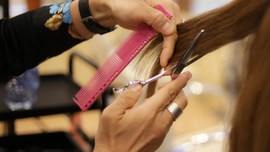
Dental clinics, beauty salons and tattoo studios may use aprons during treatment preparation, colour services, body art procedures, waxing, skincare, cosmetic treatments, cleaning or equipment processing. In these close-contact settings, aprons can support hygiene, presentation and task protection.
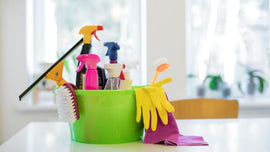
In food service and hospitality, aprons can help protect clothing from food residue, splashes and wet preparation tasks. In cleaning, facilities and maintenance roles, they may be useful when handling detergents, disinfectants, bins, wet cleaning or washroom servicing.

What is the difference between disposable and PVC aprons?
Different apron materials suit different tasks. The right choice depends on how long the apron will be worn, what it may be exposed to and whether it needs to be discarded or cleaned after use.
Disposable aprons
Disposable aprons are commonly used for short-duration tasks where a fresh barrier is needed between activities, people or work zones. They may suit care routines, food handling, cleaning, patient support, beauty tasks and general hygiene procedures.
For everyday workplace use, an LDPE disposable apron can support hygiene routines where single-use protective wear is required. In food handling environments, an HDPE HACCP disposable apron may suit workplaces where food safety procedures and hygiene controls are part of daily operations.
PVC aprons
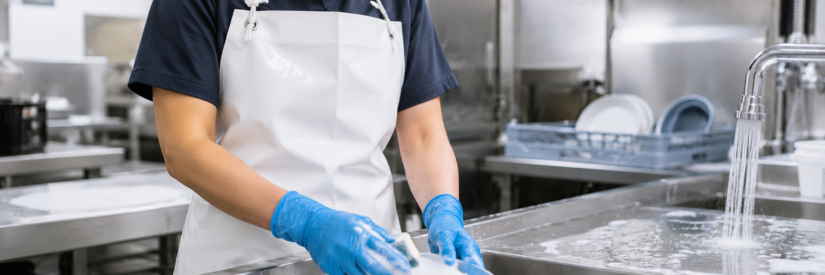
PVC aprons are generally suited to heavier-duty or wet tasks where greater durability is required. They may be used in cleaning, dishwashing, food processing, washdown areas, maintenance or situations involving frequent splashes.
For heavier-duty applications, a PVC heavy-duty bib apron may be suitable where reusable protective wear is preferred. Because PVC aprons are reusable, workplaces should consider cleaning, storage and maintenance between uses.

When should aprons be changed or cleaned?
Aprons should be changed or cleaned whenever they become visibly soiled, damaged or no longer suitable for the task. In higher-risk hygiene settings, they may need to be changed between clients, patients, residents, food zones or care activities.
Disposable aprons should be removed carefully and placed into the appropriate waste stream after use. Reusable aprons should be cleaned according to workplace procedures and product instructions.
What should workplaces consider when choosing aprons?
When choosing aprons, workplaces should consider the task first. A personal care routine, food preparation activity, tattoo set-up, cleaning process and dishwashing shift may all require different coverage and durability.
Key factors include material, fit, coverage length, comfort, exposure level, storage, accessibility, disposal, cleaning requirements and compatibility with other PPE. The Department of Health, Disability and Ageing provides ICEG-endorsed infection prevention and control resources to support best practice across community, hospital and institutional settings.
Choosing protective wear that suits the task
Aprons are a practical part of protective wear across many workplaces. Their value comes from matching the apron to the environment and using it as part of a broader hygiene and PPE routine.
Livingstone offers a broad range of aprons and protective wear, including disposable aprons, PVC aprons and related PPE, to support different workplace tasks and industry needs.
References
Australian Commission on Safety and Quality in Health Care 2026, Infection prevention and control, Australian Commission on Safety and Quality in Health Care, viewed June 2026, https://www.safetyandquality.gov.au/clinical-topics/infection-prevention-and-control
Australian Government Department of Health, Disability and Ageing 2025, ICEG-endorsed resources for infection prevention and control, Australian Government Department of Health, Disability and Ageing, viewed June 2026, https://www.health.gov.au/resources/collections/iceg-endorsed-resources-for-infection-prevention-and-control


