



























































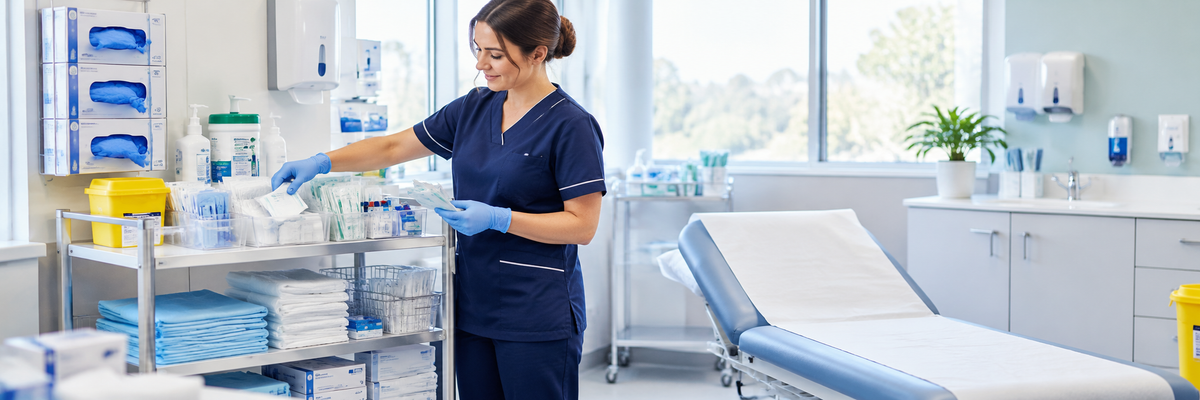
A treatment area can look fully stocked and still be difficult to work from. Supplies may be available, but if high-use items are hidden behind slower-moving stock, products live in different places depending on who last restocked them, or shelves are too full to see what is running low, replenishment becomes harder than it needs to be.
Effective treatment area organisation is built around how supplies are actually used. Whether the space is a treatment room, first aid area, consultation room, care station, dental surgery, beauty room or tattoo workspace, the same principle applies: frequently used supplies should be easy to find, easy to replace and stored in a way that supports the workflow.
Why do treatment areas become difficult to restock?
Restocking problems often develop gradually. Extra boxes are added wherever space is available, reserve stock becomes mixed with working stock, and products that are rarely used begin occupying the most accessible shelves.
NSW Health’s Agency for Clinical Innovation describes an effective clinical consumables approach as having the right stock, in the right amount, in the right place. Its ODDS Project found that reviewing stock levels, improving labelling and removing excess stock could help reduce waste and make clinical storage easier to manage.
Rather than simply adding more storage, it can be more useful to review whether the current layout reflects actual usage.
What should stay closest to the point of care?
High-use consumables generally benefit from being stored closest to where they are needed.
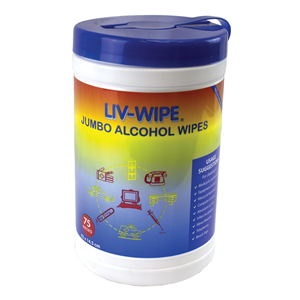
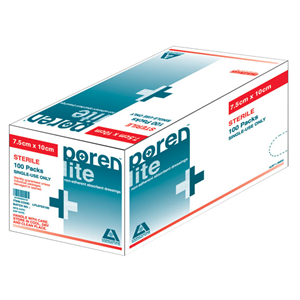
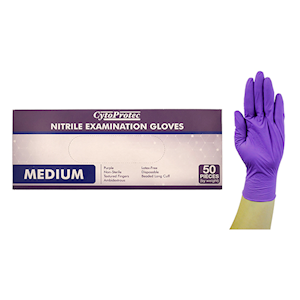
This might include frequently used gloves, wound care supplies, syringes and accessories, diagnostic accessories or swabs and wipes.
Less frequently used products can sit in secondary storage, provided they remain easy to locate when required.
A simple way to think about placement is:
High use = easiest to reach
Lower use = secondary storage
This can reduce unnecessary movement and make it easier to notice when frequently used items are running low.

Can supplies be grouped around tasks instead of product categories?
In some treatment areas, organising supplies by workflow can be more practical than storing every item purely by product type.
For example, teams may benefit from grouping commonly used supplies around activities such as:
- wound care
- observations and monitoring
- injections
- specimen and blood collection
- hygiene and cleaning
- PPE
A monitoring area may bring together monitoring and testing equipment and related diagnostic accessories, while a specimen collection area may need blood collection supplies, gloves and syringes nearby.
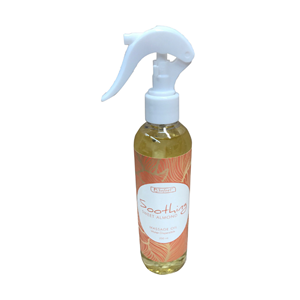
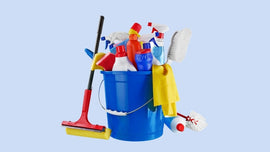
Similarly, hygiene stations may work better when cleaning supplies, wipes and other frequently used items are stored together.
The goal is not to duplicate stock unnecessarily, but to consider which products are often used together and whether their storage locations reflect that.
How can stock levels be easier to understand at a glance?
A well-organised treatment area should make it reasonably easy to see what is available and what may need replenishing.
Clear labels, consistent shelf locations and visible product fronts can make stock easier to identify. Separating reserve stock from supplies currently in use can also reduce confusion.
Avoid filling shelves so tightly that products disappear behind one another. NSW Health’s infection prevention guidance notes that stock levels should meet the needs of the clinical area without compromising sterility or contributing to unnecessary wastage. It also recommends appropriate designated storage for clean and sterile supplies.
For medicines, additional storage, security and regulatory requirements apply and should always be followed.
Why can overstocking make restocking harder?
More stock does not always mean a better-stocked treatment area.
Overfilled shelves can make it harder to identify low quantities, rotate older stock or spot products approaching expiry. They can also encourage duplicate ordering when staff cannot easily see what is already available.
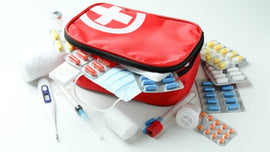
This is especially relevant across broad, frequently replenished categories such as protective wear and first aid supplies, where multiple sizes, formats or item types may need to be stored in the same area.
Removing unnecessary excess can create more room for frequently used products while keeping reserve stock visible and easier to manage.

Should treatment area organisation change over time?
A storage system should not be treated as permanent.
Changes in procedures, patient volumes, product use or services may alter what needs to be closest at hand. Periodic reviews can help identify items that are rarely used, products that are repeatedly moved or supplies that frequently run out before replenishment.
Treatment areas also vary between settings, so the most useful system is one that reflects the people, procedures and supplies used in that particular space.
Make the next restock easier
A well-organised treatment area is not necessarily the one with the most stock. It is one where essential consumables are visible, commonly used items are accessible and staff know where products belong.
Organising around actual usage, grouping related supplies, separating reserve stock and reviewing the layout as workflows change can make restocking more straightforward.
For busy care environments, the goal is simple: the way supplies are stored should make the next restock easier, not create the same problem again.
References
Agency for Clinical Innovation 2018, ODDS Project: Clinical Consumables, NSW Health, viewed 6 October 2026, https://aci.health.nsw.gov.au/ie/projects/odds-project
Clinical Excellence Commission 2025, Infection Prevention and Control Practice Handbook, Chapter 5, NSW Health, viewed 6 October 2026, https://cec.health.nsw.gov.au/__data/assets/pdf_file/0019/1030690/IPAC-Handbook-Chapter-5.pdf


